
Beyond Grade A: What Defines a Premium Office in 2026?
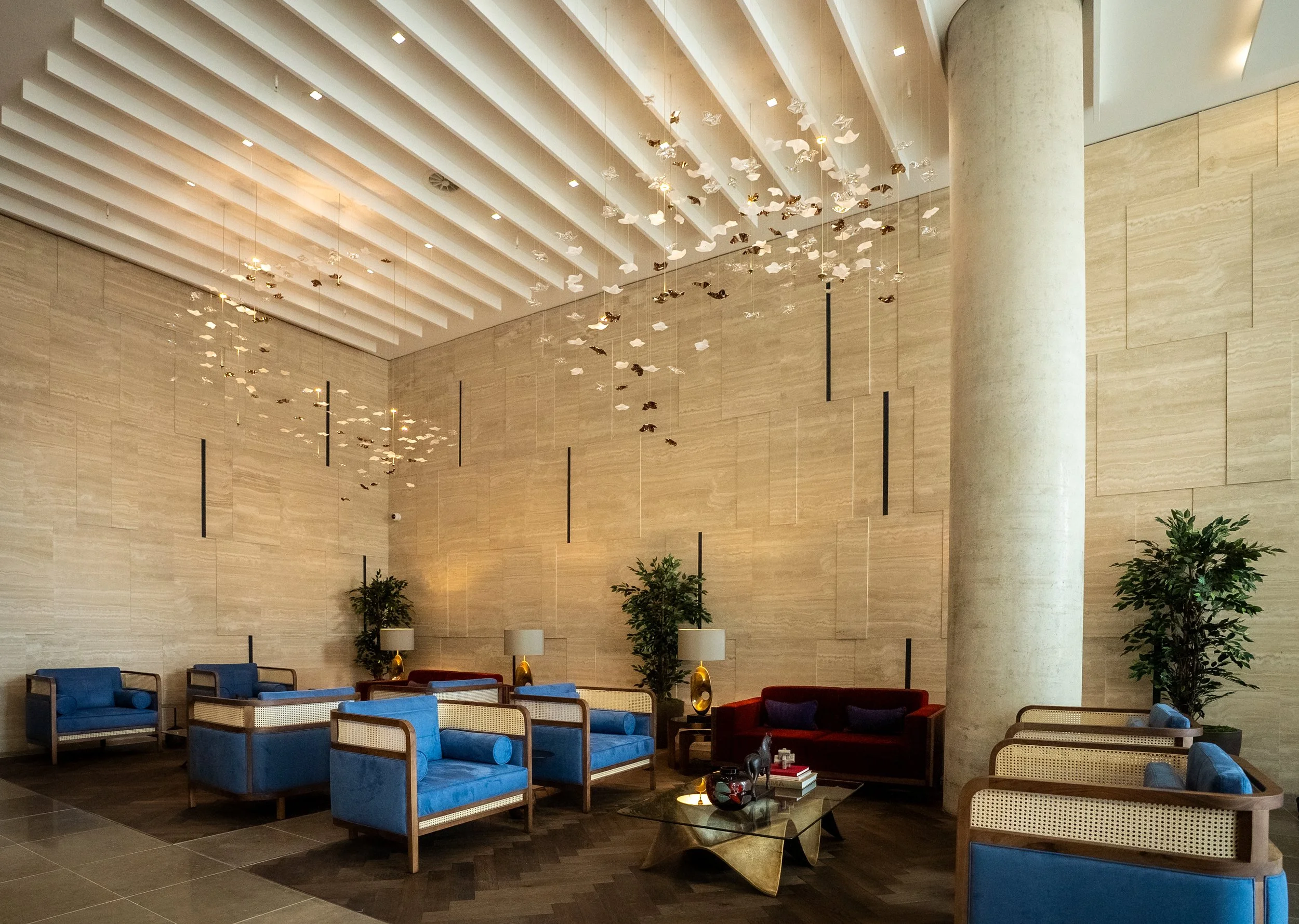
For many years, Grade A has been the benchmark for high-quality office accommodation. Location, specification, floorplates and building services have traditionally helped define the upper end of the market.
In 2026, however, the expectations placed on premium office space are becoming considerably broader.
Recent activity in Dublin suggests that demand is increasingly concentrating around higher-quality accommodation. According to market reporting published by The Irish Times in July, Dublin office take-up increased by 57% quarter-on-quarter in Q2 2026 to 623,039 sq. ft., with businesses across finance, professional services, technology and healthcare seeking accommodation capable of supporting hybrid working strategies and ESG commitments.
The question for property owners and occupiers is therefore evolving. It is no longer simply whether an office meets a Grade A specification, but what distinguishes the buildings capable of continuing to attract leading organisations over the long term.
Quality Is Becoming More Multifaceted
Location and physical specification remain fundamental to commercial property. But today's occupiers are evaluating a much wider range of factors when considering their workplace requirements.
Environmental performance, digital resilience, connectivity, employee experience, amenities and operational efficiency are increasingly interconnected.
This is creating greater differentiation between assets. Recent commentary on Dublin's office market has highlighted the challenges facing buildings that no longer meet the operational and sustainability standards expected by modern occupiers. As these requirements continue to develop, the gap between compliant, high-performing buildings and ageing stock has the potential to become increasingly significant.
For Clancourt, this reinforces the importance of looking at building quality as something that must be continually maintained and developed rather than achieved at a single point in time.
Sustainabiliy Has Moved Beyond the Credential
Environmental certification remains an important indicator of building quality, but sustainability increasingly extends beyond the certification displayed at reception. Businesses are paying greater attention to how buildings actually perform. Energy consumption, operational carbon, water usage, waste management and the efficiency of building systems are becoming increasingly important considerations, particularly as organisations work towards their own environmental and ESG commitments.
This places greater responsibility on owners to understand the operational performance of their assets and identify where continued investment can deliver improvements. A premium building in 2026 must therefore combine strong sustainability credentials with measurable performance throughout its lifecycle.
Digital Infrastructure Is Now Fundamental
The importance of digital infrastructure has also changed considerably. Reliable, resilient connectivity is no longer simply an additional building feature. For organisations operating across international markets, cloud-based systems and hybrid teams, it is fundamental business infrastructure.
Premium offices increasingly require robust fibre connectivity, secure infrastructure and the ability to accommodate changing technology requirements. The same applies to the technology operating the building itself. Smart building systems can provide owners and occupiers with greater visibility of energy use and building performance, allowing assets to be managed more efficiently and respond more effectively to changing requirements.
As technology continues to influence how businesses operate, digital resilience will remain an increasingly important component of commercial property quality.
The Workplace Experience Matters
The purpose of the office has also evolved. Hybrid working has changed how employees interact with physical workplaces, placing greater emphasis on what the office provides when people are there. High-quality shared spaces, wellness facilities, end-of-trip infrastructure, food and beverage offerings, outdoor environments and opportunities for collaboration can all contribute to the wider workplace experience.
These elements should not necessarily be considered additional perks. For employers competing for talent and encouraging meaningful office attendance, the environment surrounding the workplace can form part of the overall employee proposition. This means the distinction between the building and the experience of using it is becoming increasingly blurred.
For property owners, understanding this shift is an important part of ensuring assets remain relevant to the businesses occupying them.
Location Remains a Strategic Advantage
Even as building requirements become more sophisticated, location remains fundamental. Knight Frank's Q1 2026 Dublin office research showed that city-centre locations continued to dominate occupier demand, with technology, media and telecommunications and financial-services businesses accounting for more than half of quarterly take-up. But location itself is also being considered more broadly. Transport connectivity remains essential, while access to hospitality, green space, cultural amenities and services can contribute to how employees experience their working day.
The most successful office destinations therefore combine the quality of the individual building with the strength of the environment surrounding it. For occupiers considering long-term headquarters decisions, both increasingly matter.
Management Is Part of Building Quality
Perhaps one of the less visible characteristics of a premium office is how it is managed after completion. A building can begin with an excellent specification, but maintaining that standard requires continual attention.
Building systems need to be monitored. Shared environments need to be maintained. Technology changes. Sustainability requirements evolve. Occupier expectations shift. Long-term asset management therefore plays an important role in ensuring that the quality promised when a building is delivered continues throughout its lifecycle.
Clancourt's approach has always been based on long-term ownership and active management. Maintaining close relationships with occupiers while continuing to invest in building performance, amenities and the surrounding environment provides an opportunity to respond as requirements change.
In this context, premium is not simply a description of the physical asset. It is also reflected in how that asset is operated, maintained and improved over time.
Is Grade A Still Enough?
Dublin's office market continues to demonstrate demand for quality. Knight Frank reported a solid start to 2026, while Q2 market activity subsequently demonstrated further momentum as organisations continued to seek high-quality accommodation.
At the same time, future supply remains constrained, and parts of existing office stock face increasingly significant challenges in meeting modern environmental and occupier requirements. These conditions place an even greater focus on the quality of the buildings that are available. Grade A will continue to provide an important benchmark within commercial property. But the definition of a truly premium office is becoming more comprehensive.
Sustainability, digital resilience, workplace experience, connectivity, operational performance and long-term management increasingly sit alongside traditional measures of building specification. For Clancourt, the objective is not simply to meet today's definition of quality, but to continue investing in buildings and environments capable of responding to what businesses will require next. Perhaps the question for the market in 2026 is no longer what qualifies as Grade A, but whether Grade A itself has become the starting point.
Read more here