
Irish Commercial Property in 2026: Stability Returning in a More Selective Market
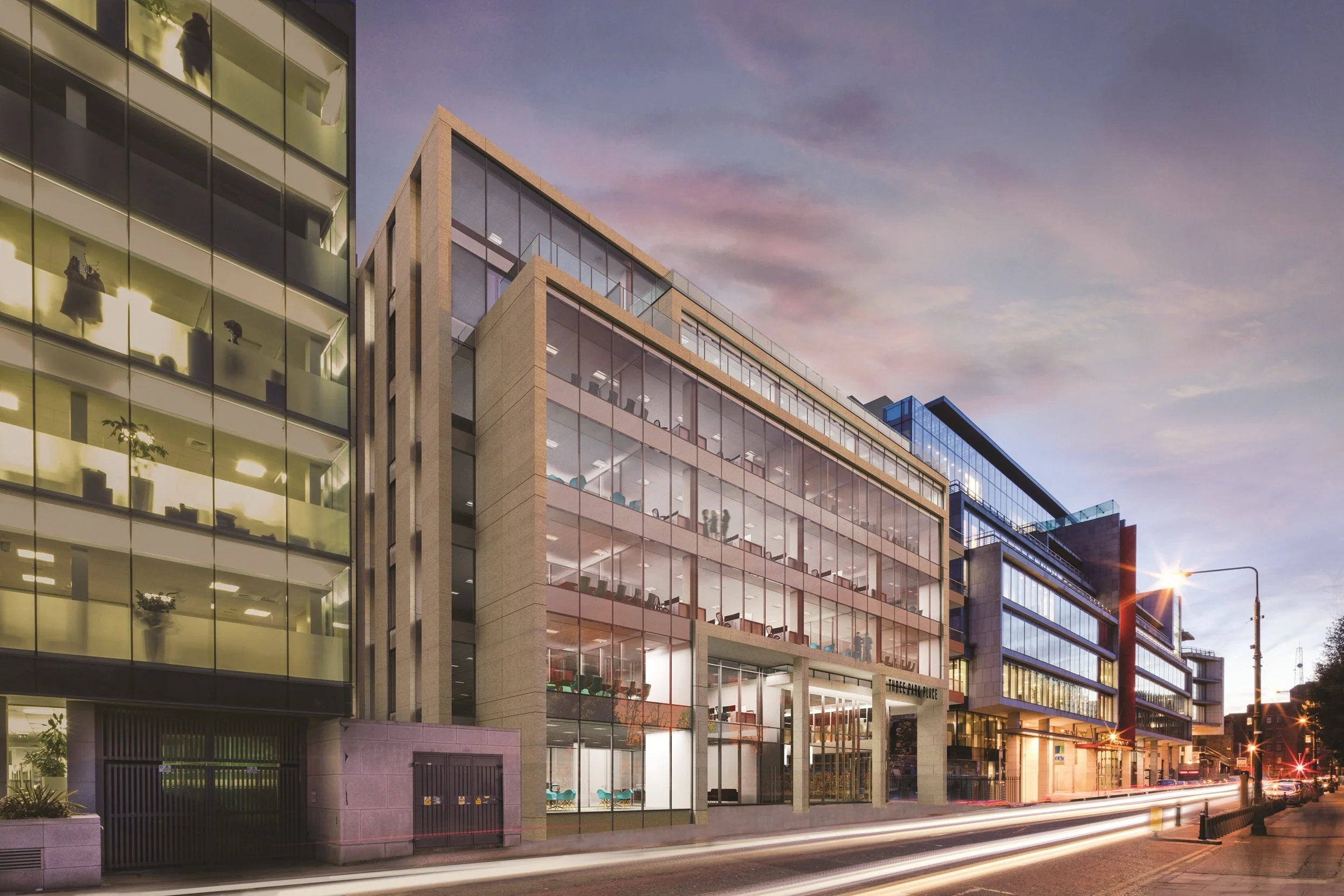
Ireland’s commercial property market enters 2026 in a more stable position following a period of adjustment across global markets. While conditions remain influenced by broader economic factors, the sector is showing signs of improved confidence, supported by Ireland’s economic performance, employment levels and continued demand for high-quality commercial space.
Recent projections indicate that investment volumes in Irish commercial real estate could reach between €3 billion and €4 billion during 2026, representing an increase on the approximately €2.5 billion recorded in 2025. This reflects a gradual return of investor activity as pricing stabilises and greater clarity emerges across capital markets.
For developers, investors and asset managers, the current environment represents a transition toward a more measured and selective investment cycle, with a clear emphasis on asset quality, location and long-term performance.
Investment Activity Signals Gradual Recovery
The commercial property sector has undergone a period of recalibration following changes in financing conditions and wider economic adjustment. In Ireland, investment activity has remained consistent, particularly within the office sector, where demand continues to focus on well-located, high-quality assets.
As financing conditions become more predictable, investor engagement is increasing, supported by improved pricing alignment and more stable expectations. While transaction volumes remain below previous peak levels, activity is expected to increase gradually throughout 2026.
This shift reflects a more disciplined investment approach, with capital targeting assets that demonstrate strong fundamentals, including location, specification and long-term management strategy.
Office Market Performance and Occupier Demand
The office sector continues to evolve as occupiers refine workplace strategies. Demand remains concentrated in high-quality, well-located buildings that meet current expectations in terms of environmental performance, layout and overall workplace environment.
In Dublin, and particularly within central locations such as Dublin 2, vacancy rates remain lower for prime office stock compared to secondary buildings. This reflects a continued preference for assets that support modern working requirements, including energy efficiency, accessibility and high-quality shared spaces.
Occupiers are increasingly selective, prioritising buildings that provide operational reliability and align with corporate ESG objectives. As a result, assets that are actively managed and regularly upgraded are better positioned to attract and retain tenants.
At Park Place, occupancy levels reflect this trend, with demand focused on well-managed office environments that meet current occupier requirements. This reinforces the importance of maintaining asset quality through consistent investment and long-term management.
Retail Performance in Prime Locations
Retail performance has stabilised in a number of prime city centre locations, supported by strong employment levels and consistent levels of footfall. In Dublin, established retail streets and mixed-use environments continue to attract occupiers, particularly where there is a strong connection between office, residential and retail activity.
For asset managers, this reinforces the importance of location and integration within the wider urban environment. Well-positioned assets that benefit from surrounding infrastructure and consistent activity are more likely to maintain occupier demand over time.
Economic Conditions and Market Stability
While market conditions have stabilised, the broader economic environment continues to influence commercial property performance. Factors such as financing costs, inflation trends and global economic conditions remain relevant to investment decision-making.
However, the Irish market continues to benefit from strong underlying fundamentals, including economic growth, a skilled workforce and its position as a hub for international business. These factors support continued demand for high-quality commercial space, particularly within established urban locations.
In this context, investor focus remains on assets that can demonstrate resilience through consistent performance, strong occupier demand and effective asset management.
A Long-Term Perspective on Commercial Development
The Irish commercial property market has demonstrated resilience through multiple economic cycles. As the market moves through 2026, the emphasis continues to shift toward quality, sustainability and long-term asset performance.
At Clancourt, this long-term perspective informs our approach to development and asset management. By focusing on well-located assets, consistent reinvestment and active stewardship, commercial properties can continue to support occupier requirements while maintaining performance over time.
This approach is particularly relevant in central locations such as Dublin 2, where demand remains focused on quality and reliability. Assets that are managed with a long-term view are better positioned to respond to changing market conditions and evolving occupier expectations.
Read more here