
The Evolution of Dublin’s Office Market in 2026
Dublin’s commercial real estate market closed 2025 with renewed confidence, recording its strongest year for office transactions since 2018. Supported by sustained economic growth, a resilient labour market and improved geopolitical certainty, occupier demand returned at scale, with total take up reaching 2.6 million sq ft, according to research from Knight Frank. This represents a 20 per cent increase year on year, with more than half of activity taking place in the second half of the year, driven largely by the technology sector.
A Market Rebound with Long-Term Implications
This performance reflects more than a cyclical rebound. It points to a fundamental shift in how offices are perceived, used and valued. As recent commentary reported by the Business Post suggests, the market is moving away from a focus on space provision and towards environments that actively support organisational performance and employee well being.
The office is no longer judged by presence alone. Its relevance now lies in its ability to enable learning, collaboration and productivity at moments of peak intensity. In this context, capability, defined as the intersection between physical design and human performance, has emerged as a defining principle for the next phase of the office market.
Designing Offices for Performance and Flexibility
A capable office is built on balance. It must support both focused individual work and collective collaboration, offering a mix of quiet areas, breakout spaces, private meeting rooms and larger shared environments. The traditional model of uniform open plan layouts has largely fallen away, replaced by more adaptable and varied spatial strategies that reflect how people actually work.
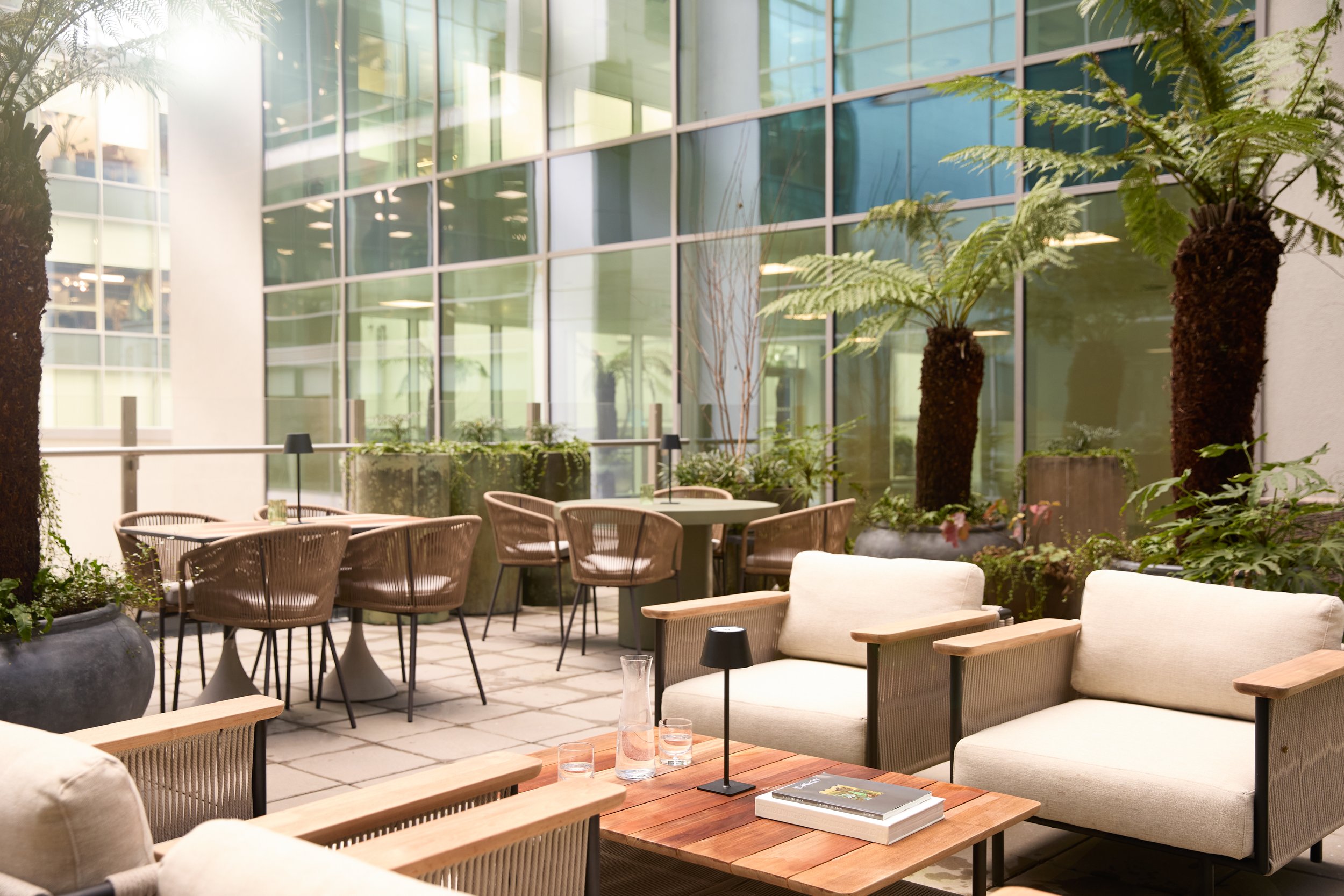
Amenity provision has evolved alongside these changes. Demand is increasingly centred on functionality rather than spectacle. Research indicates that occupiers are prioritising amenities that directly support work, connection and well being over prestige driven features with limited day to day value. This places greater emphasis on relevance, quality and integration, ensuring that amenities contribute meaningfully to productivity and experience rather than acting as superficial additions.
Location, Talent and the Workplace Experience
These shifts are closely linked to wider labour market dynamics. With competition for talent remaining intense, the workplace continues to play a critical role in attraction and retention. Offices are expected to provide environments that employees actively choose to return to, supporting professional development, collaboration and personal well being. Increasingly, this expectation extends beyond the building itself to its surrounding context.
City centre locations continue to dominate occupier preference, accounting for approximately 85 per cent of office take up in 2025, with Dublin 2 representing around half of all activity. Strong transport connectivity, access to food and beverage offerings, proximity to healthcare and broader urban infrastructure all contribute to this sustained demand. Central locations enhance the overall workplace experience and reinforce the office’s role as a hub for engagement and collaboration.
Supply Pressure and the Future of Office Space
Looking ahead, supply constraints are expected to place further pressure on the market. Approximately 65 per cent of new office space currently under construction is already pre-let, limiting the availability of best in class stock over the coming years. Vacancy rates for prime space are forecast to tighten further over the next 12 to 18 months, with rental growth projected to exceed 10 per cent in 2026.
In this environment, buildings that fail to evolve face an increasing risk of obsolescence. Offices that do not deliver capability and well being struggle to remain competitive, becoming underutilised assets rather than productive workplaces. The distinction between high-performance buildings and residual stock is widening, reinforcing the importance of long-term asset quality and adaptability.
For landlords and asset managers, this evolution requires a broader and more human-centric approach. Investment must extend beyond physical specification to include service quality, operational flexibility and the overall experience of the workplace. Understanding occupier needs and responding with considered, tailored solutions is now central to sustaining relevance and long-term value.
As Dublin’s office market moves through 2026, success will be defined by those who recognise that offices are no longer static containers for work. They are dynamic environments that shape behaviour, culture and performance. Designing for capability, rather than simply delivering space, is becoming the foundation of long-term resilience in the commercial real estate market.
Read more here