
From building performance to occupier wellbeing, sustainability is becoming part of the everyday responsibility of long-term ownership.
Sustainability in commercial property is moving beyond compliance and certification. For owners and occupiers, it is increasingly connected to how a building performs, how it feels to use, what it costs to operate and how well it can adapt over time.
For Clancourt, this is not a new consideration. As long-term owners, continued investment in our buildings has always been central to how we manage our portfolio. Today, that means looking at sustainability as a combination of environmental performance, operational efficiency, resilience and the experience of the people who use our spaces.
Performance matters
A strong sustainability credential is valuable, but it is only part of the picture. The focus is increasingly on how buildings perform in operation. Measuring energy use, identifying inefficiencies and investing in building systems allows owners to make better decisions and improve performance over time.
This shift is reflected in Ireland's evolving building energy framework. Changes to the non-residential BER system in 2026 have made energy performance easier to understand and compare, while wider regulatory requirements continue to raise expectations for commercial buildings. For long-term owners, the priority is not simply meeting today's standard, but ensuring assets remain efficient and relevant as those standards evolve.
The occupier experience is part of sustainability
The way businesses assess office space is changing too. Location, specification and cost remain important, but energy efficiency, wellbeing, amenities and the overall workplace environment are increasingly part of the decision.
Green space has a practical role within that experience. Research referenced by the World Health Organization and European Environment Agency links access to nature and urban green space with benefits including reduced stress, opportunities for physical activity, social connection and relief from noise and heat. In the workplace, spaces that allow people to step outside, reset or take a genuine break can contribute to a healthier working environment.
Park Place: investing in the everyday experience
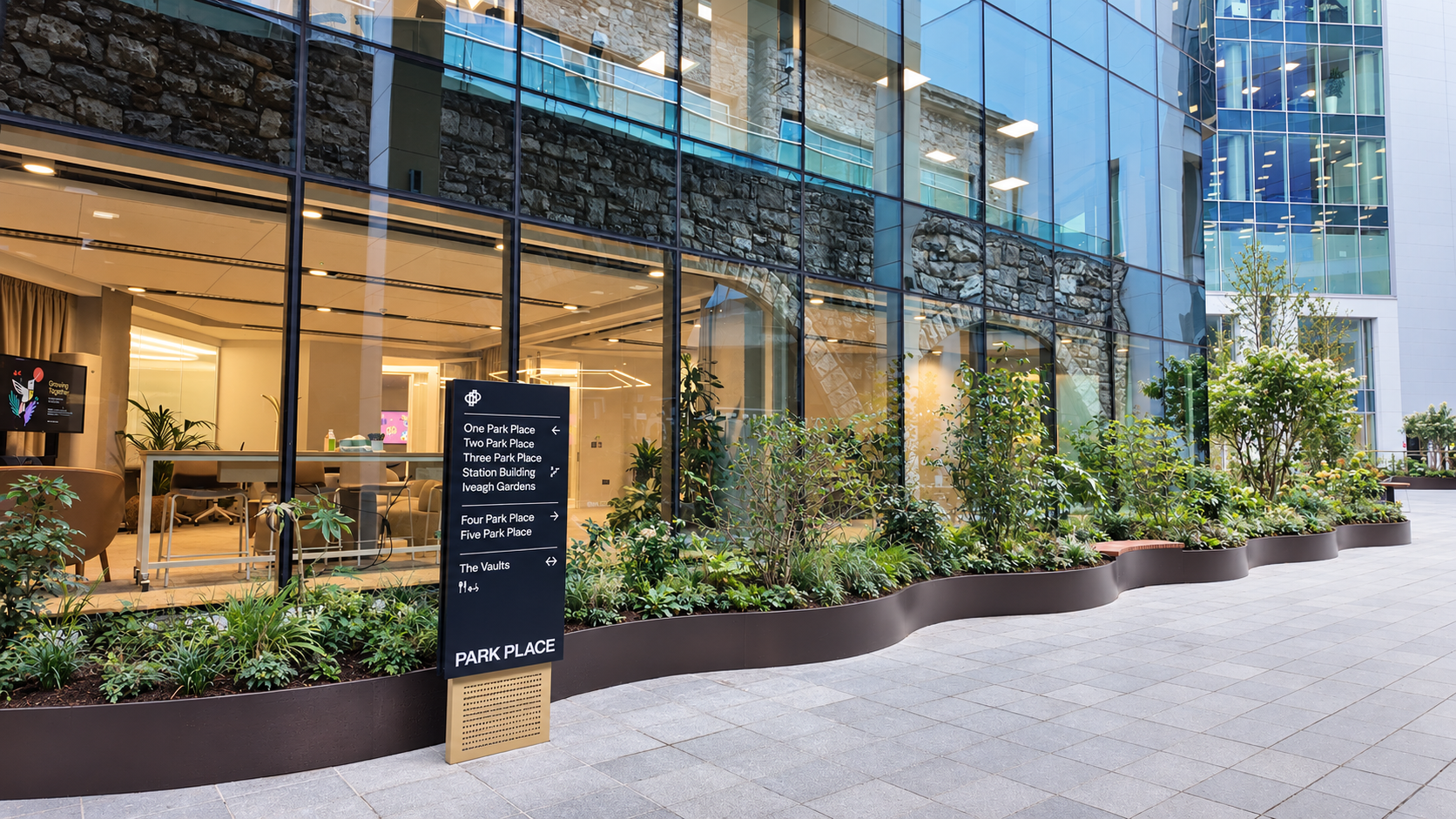
At Park Place, recent investment shows how environmental performance and occupier wellbeing can work together. New landscaping and green areas soften the campus and create places to pause between meetings, take a call outdoors or step away from the desk. The Iveagh Gardens, just moments away, extend that connection to green space beyond the campus.
Wellbeing is supported by a wider mix of amenities, including Platinum Pilates, UN1T gym and the new atrium, which provides a calm shared space for coffee, informal meetings and time away from the desk. These improvements form part of an ongoing approach to evolving Park Place in line with how occupiers want to work.
Protecting long-term value
The commercial property market is becoming more selective. Buildings that fall behind changing energy, regulatory and workplace expectations can become more expensive to operate or retrofit and more difficult to let. Sustainability is therefore closely linked to resilience and long-term asset value.
The response is not a single upgrade or one-off sustainability project. It is a continuous process of assessment, investment and management. Energy efficiency, renewable energy, building systems, operational data, amenities, landscaping and occupier wellbeing all contribute to the quality and resilience of an asset.
A long-term responsibility
Clancourt's approach is grounded in long-term ownership. We invest in our buildings, maintain close relationships with our occupiers and continually assess where improvements can strengthen performance and experience.
Sustainability is part of that responsibility. The measure of a successful commercial building is not simply how it performs today, but whether it is being managed and invested in to remain efficient, resilient and relevant for the future.
Read more here